Type "Kingwood TX median home price" into a search bar and you'll get a single number. Believe it, and you'll misjudge your budget by six figures.
That's not an exaggeration. Kingwood is marketed, and largely governed, as one community: one homeowners' association running the parks, one greenbelt trail system threading through every village, one "Livable Forest" brand covering roughly 14,000 acres between the San Jacinto River and Lake Houston. But the two sides of that community, Kingwood East and Kingwood South, have been selling like two different cities. A single blended median flattens that gap into a number that describes neither side accurately, which is exactly the problem for anyone comparing homes across Kingwood right now.
The Same Association, Two Different Markets
As of a market snapshot published in late June 2026, homes in Kingwood East were selling at a median price of $495,000 in an average of 48 days on market, up 17.2 percent in price and 34 days slower than the year before. A separate snapshot for Kingwood South, published in February 2026, put that submarket's median at $369,200, with homes averaging 127 days to sell, up 23.1 percent in price but 84 days slower year over year.
Line those two figures up and the gap is stark:
| Kingwood East | Kingwood South | |
|---|---|---|
| Median sale price | $495,000 | $369,200 |
| Average days on market | 48 | 127 |
| Change vs. prior year | Price +17.2%, DOM +34 days | Price +23.1%, DOM +84 days |
Even allowing for the few months between when each snapshot was pulled, a $126,000 spread and a roughly 2.5x difference in time on market between adjoining sections of the same planned community is not something you'd expect if the two areas functioned as one market. Something structural is doing that work, and it isn't the association, the trails, or the parks. Those are identical on both sides of Kingwood Drive.
What's Actually Held Constant
Every village in Kingwood, East and South alike, answers to the same Kingwood Service Association, which maintains the community's parks and the more than 75 miles of paved greenbelt trail connecting them. On the South side, the KSA runs Deer Ridge Park, with its sports fields and duck pond, and East End Park, a nature preserve with trails running down to Lake Houston. River Grove Park adds a boat ramp, an 18-hole disc golf course, fishing areas, and picnic shelters, all open to residents regardless of which village they live in. The Dylan Duncan Skatepark, the first public skatepark built by the City of Houston, sits in the same shared system. Kings Harbor Waterfront Village, with its restaurants overlooking Lake Houston, and the central Kingwood Town Center, are community-wide destinations rather than perks reserved for one side.
The combined property tax rate, layering Harris County, the City of Houston (Kingwood was annexed in 1996), Humble ISD, Lone Star College, and a municipal utility district, runs in the neighborhood of 2.5 to 2.9 percent across the community. That rate doesn't discriminate by geomarket either. A buyer on either side of Kingwood is paying into the same overhead structure and drawing on the same amenities. If the association, the trails, and the tax base are constants, the $126,000 gap has to come from something else: the housing stock itself.
The Mechanism: Vintage and Lot Size, Not Location Alone
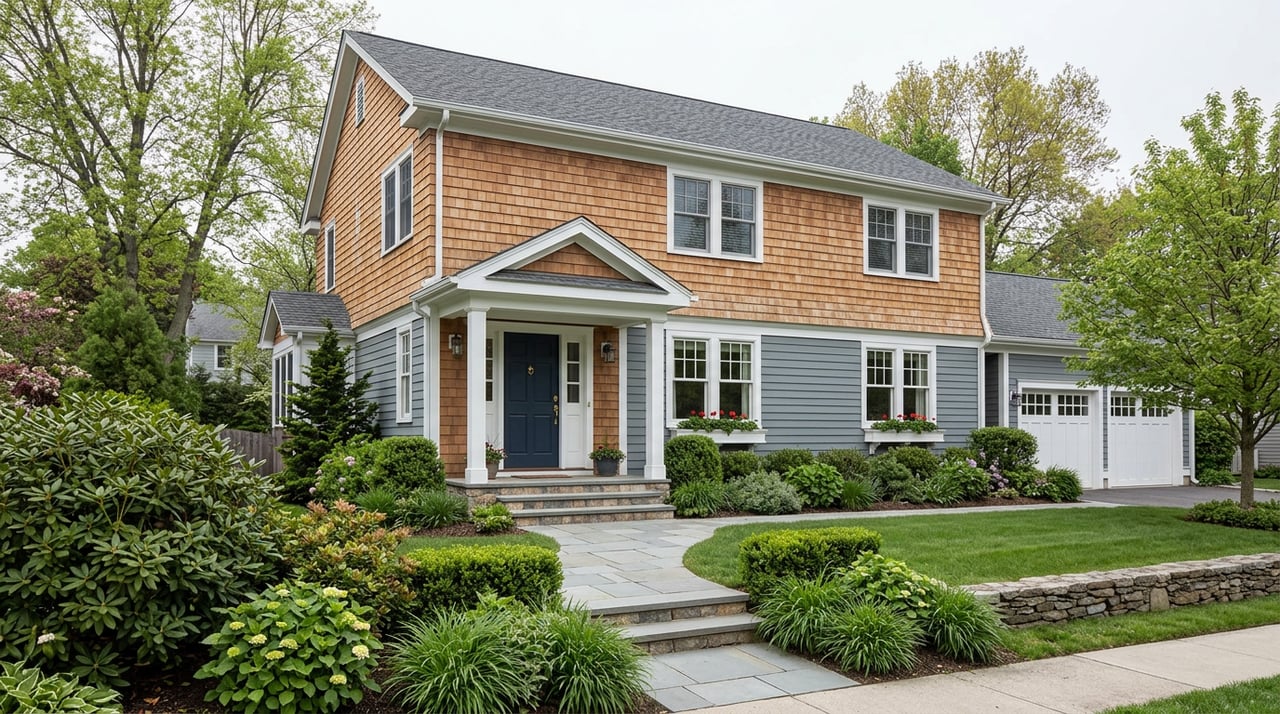
Kingwood's original village, Trailwood, opened in 1971 as the first section of the Friendswood Development Company and King Ranch's master plan. Kingwood South carries forward a lot of that early-1970s and 1980s character: the housing stock is described as predominantly traditional, with two-story brick homes and ranch-style houses on generous wooded lots, largely built out. New construction there is the exception, not the rule, concentrated in a handful of newer sections like Royal Shores.
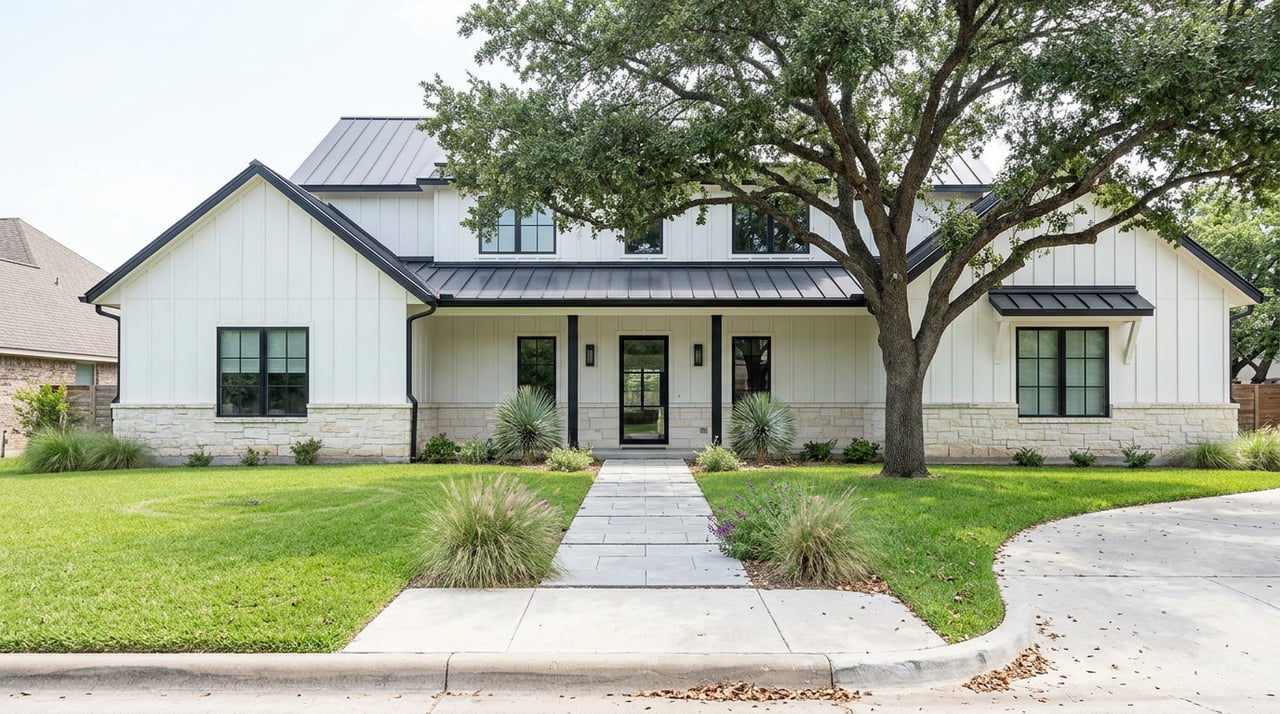
Kingwood East, developed and filled in over a longer stretch through the 1990s, carries a wider mix. Traditional two-story brick remains common, but so do Georgian, Colonial, and contemporary designs, and custom homes on larger estate lots show up more frequently in its newer villages. Kingwood East also sits closer to Lake Houston itself, which is part of why waterfront-adjacent inventory concentrates there.
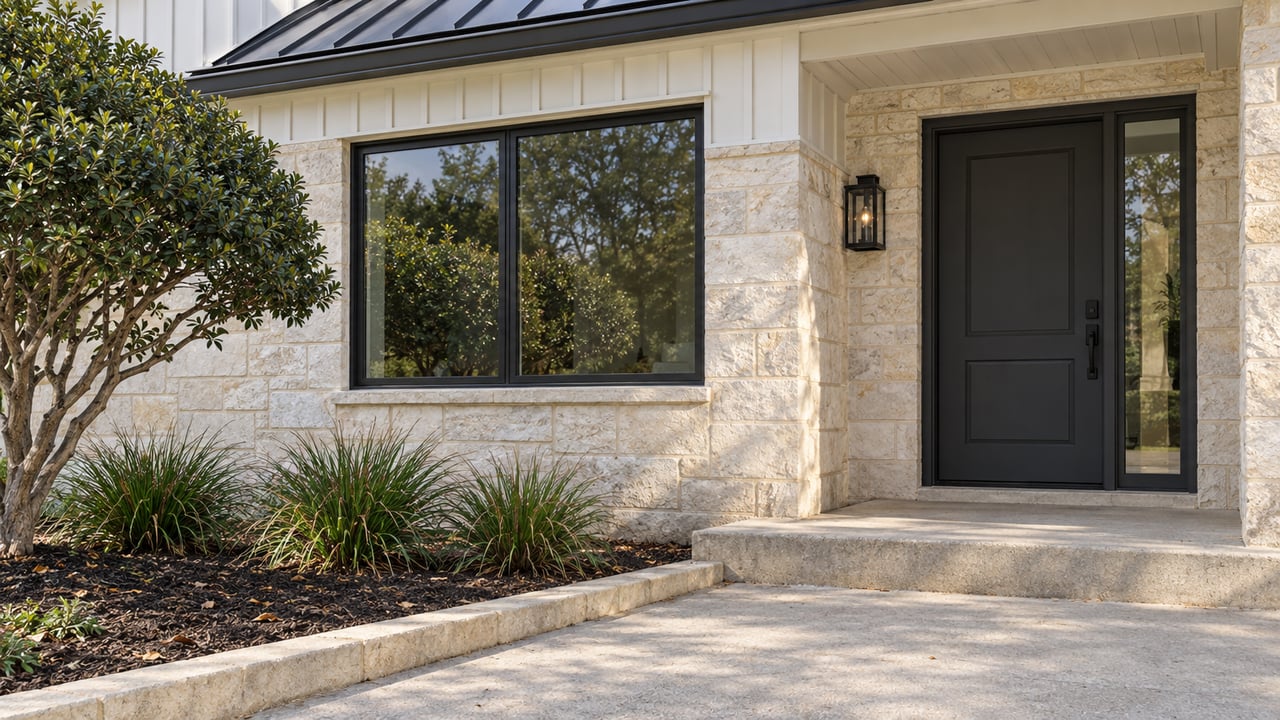
Put plainly: Kingwood South is where the community started, and its housing stock skews older and more uniform. Kingwood East is where the community kept building, and its housing stock skews newer, larger, and more varied. That's a difference in what buyers are actually purchasing, not a difference in what the association provides or what the trail system connects to. A $495,000 median in one submarket and a $369,200 median in the other isn't the market saying one side is more desirable than the other. It's the market pricing two different generations of construction that happen to share a name, a homeowners' association, and a ZIP code range (77339, 77345, and 77346, with a small sliver in 77325).
Why This Matters More Than the Blended Number
If you're comparing Kingwood to other Houston-area suburbs using a single citywide figure, you're comparing an average of two things that don't behave the same way. A buyer targeting $370,000 to $400,000 who searches "Kingwood" broadly is going to spend a lot of time looking at listings priced for Kingwood East's newer stock and wondering why nothing in their range looks the way they expected. A seller in an older Kingwood South village who prices against a blended Kingwood-wide comp is likely to either overprice against their own submarket's slower absorption rate or underprice against what a genuinely updated home nearby could command.
The 127-day average in Kingwood South also isn't necessarily a red flag on the neighborhood. Slower absorption in an area with older, more homogenous inventory often means buyers are being more selective about condition and updates within a narrower price band, not that demand for the area has fallen off. Kingwood East's faster 48-day average reflects a wider spread of price points and home styles pulling in a broader buyer pool at once. Neither number tells you which side is the "better" investment. Both numbers tell you that you need to know which side you're pricing against before you make an offer or set a list price.
What This Means for Your Search
If you're comparing homes across Kingwood, the practical move is to stop treating it as one search and start treating it as two. Pull comps specific to the village you're looking at, whether that's Kings Point or Kings Crossing on the east side, or Kings Lake Estates or Royal Shores on the south side, rather than leaning on a Kingwood-wide average that blends both. Ask what year the section was developed and whether the lot sizes and floor plans match what you're comparing it against. A three-bedroom brick traditional built in the 1980s and a custom home on an estate lot built two decades later can both carry the word "Kingwood" and still be answering to completely different demand curves.
Frequently Asked Questions
Does the price gap mean Kingwood East is a safer place to buy? No. The gap reflects differences in the age, size, and variety of the housing stock between the two submarkets, not a judgment on the neighborhoods themselves. Both sides share the same association, parks, and trail system.
Should I limit my search to just one side of Kingwood? Not necessarily, but you should know which submarket a listing falls into before you compare its price or days on market to another Kingwood listing. A home in Kingwood South and a home in Kingwood East can look similar in photos and still be priced against entirely different comp sets.
Is Kingwood South's slower average time on market a sign of declining demand? The data available doesn't support that conclusion. A longer average days-on-market figure in an area with older, more uniform housing stock often reflects buyers being more selective about updates and condition, not softening demand for the area overall.
If you're weighing a move within Kingwood, or trying to figure out what a specific village's price history actually says about your timeline, that's a conversation worth having before you write an offer or set a list price. Texas Residential Specialists works both sides of Kingwood and can walk you through what the comps in your specific village are really saying. Request a complimentary home valuation or schedule a consultation to get numbers that reflect where you're actually buying or selling, not a blended average that describes neither.