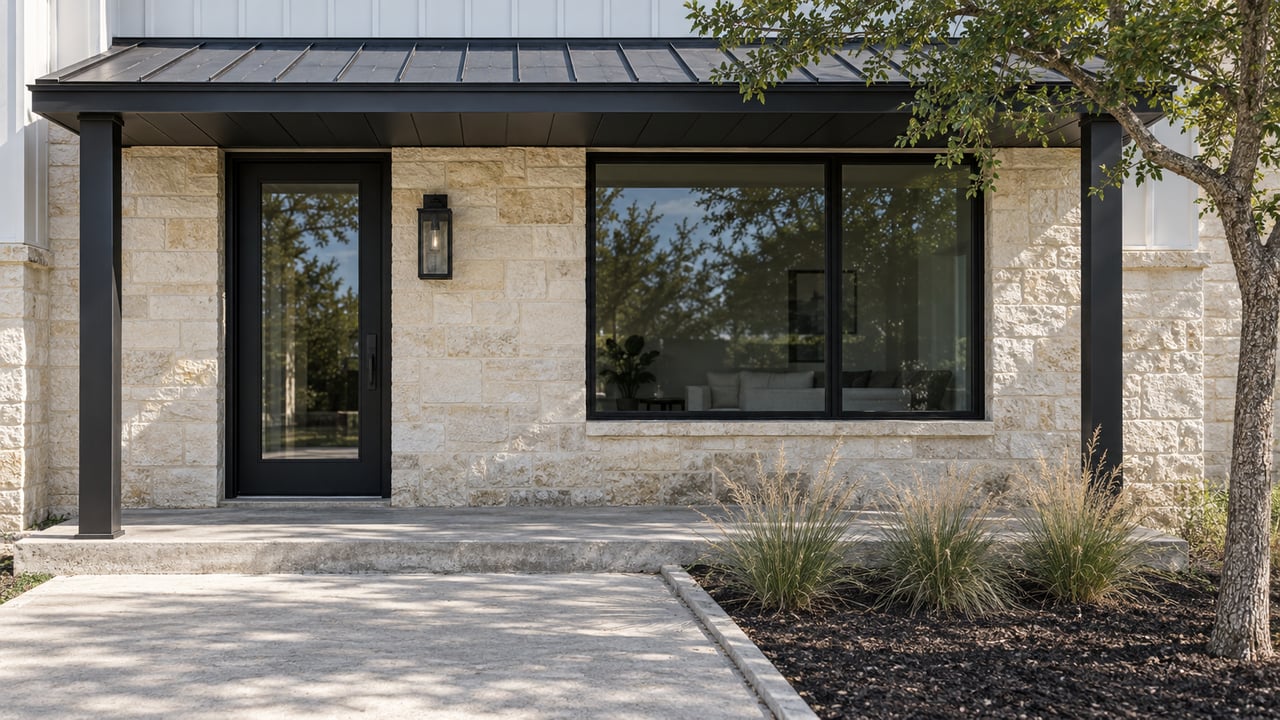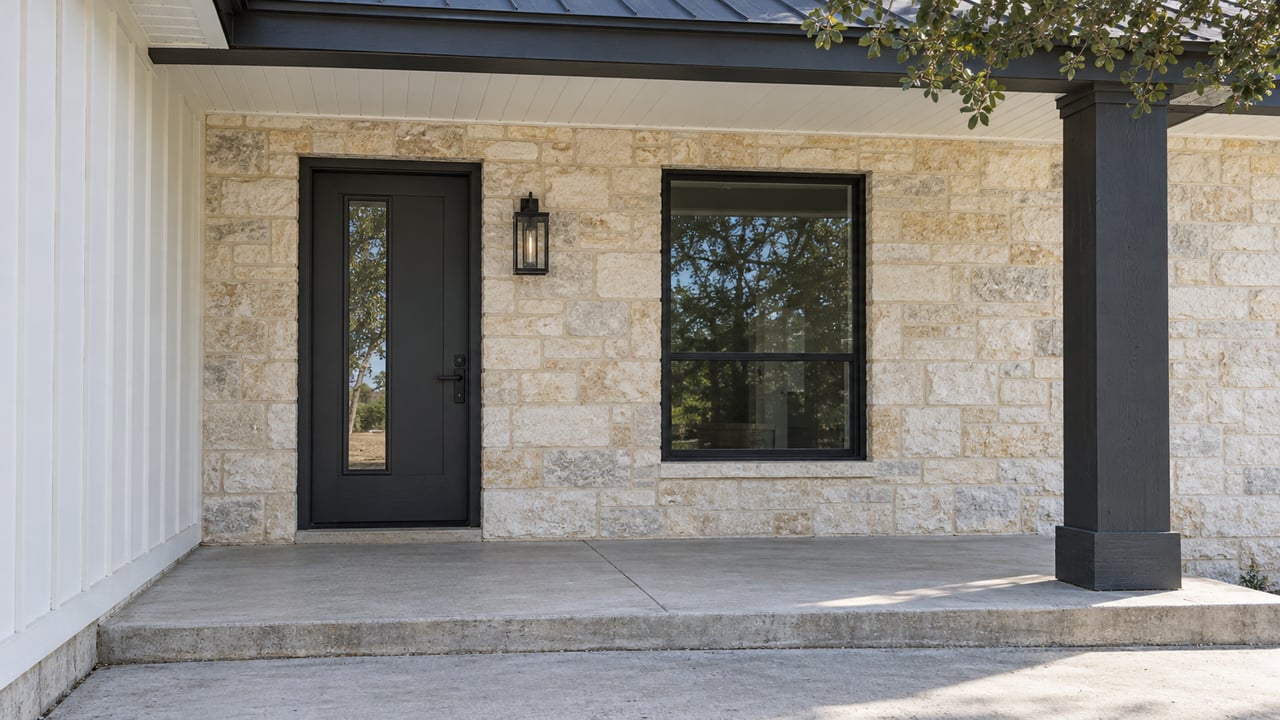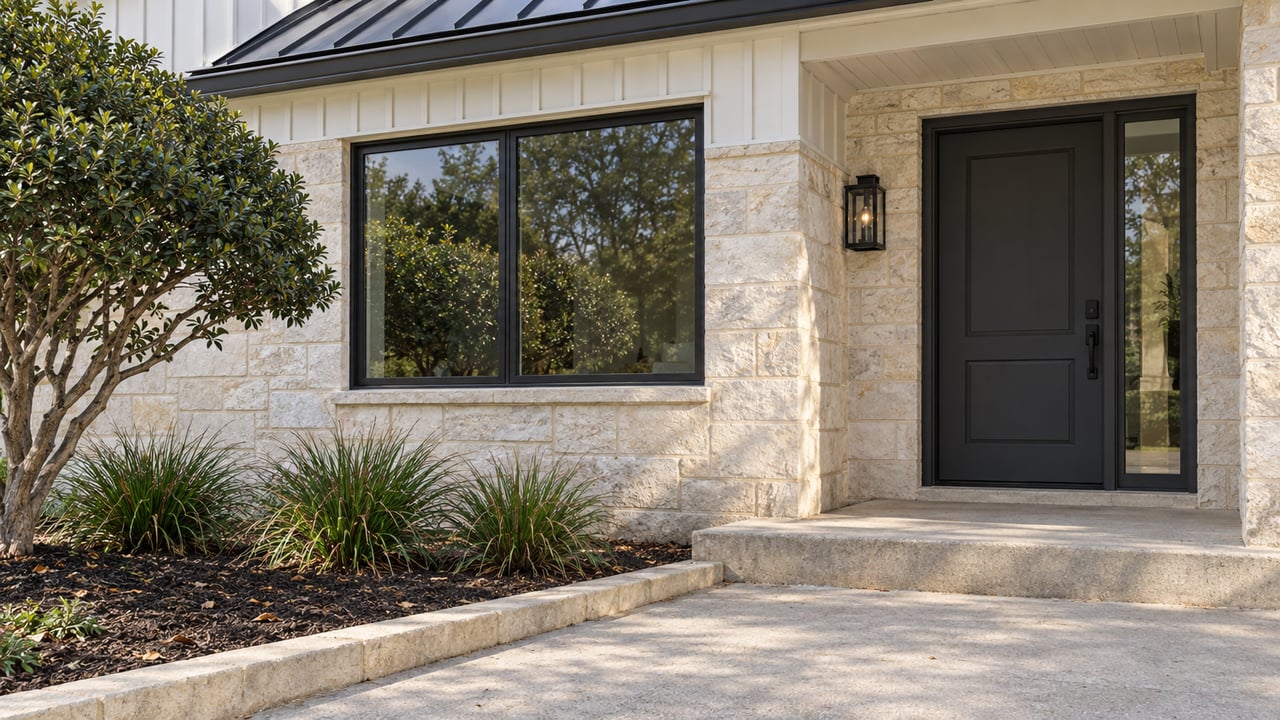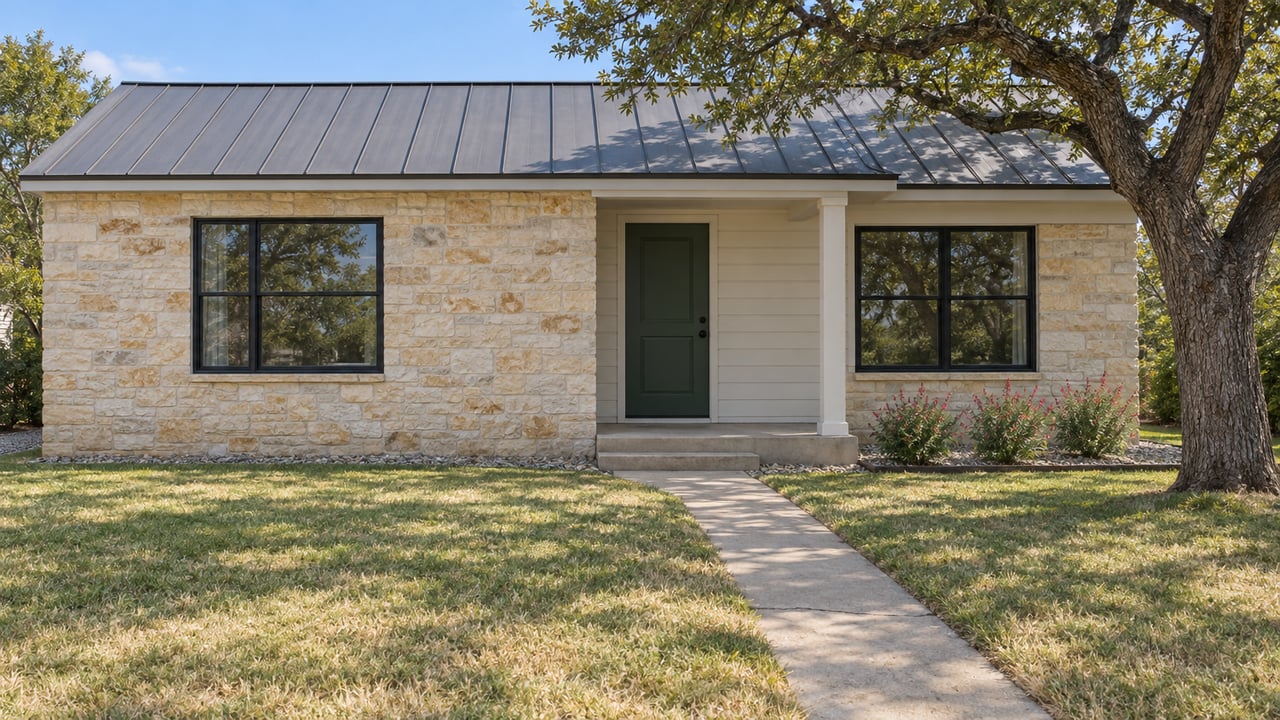
Crestview began as the Richcreek Dairy farm. In 1947 the Austin Development Corporation started building the Crestview Addition there. A drainage channel made the swampy ground buildable, and that channel now runs down the median of Arroyo Seco. The second section followed in 1948, along with a commercial district that grew into the Crestview Shopping Center. The western half of the neighborhood was annexed in 1951. An early sales banner reproduced in the Crestview/Wooten Combined Neighborhood Plan reads "Large Lots for Sale."
That origin puts much of Crestview's housing stock right where one clause of Austin's HOME code is aimed. The Preservation Bonus treats houses built on or before December 31, 1960, as their own category. Owners who keep those houses and add units get a break on floor area. It's the only exemption from gross floor area and FAR that HOME offers. Very few owners take it. As of the City's October 6, 2026 data update, Austin had approved 742 HOME Phase 1 applications covering 1,482 new units, and 9 of them used the Preservation Bonus.
If you're pricing a Crestview cottage as a future two- or three-unit site, that low number matters. The bonus's limits fall on the new units. Keeping the old house adds a modest amount of building room, and in return the front of the lot stays as it is.
What the bonus asks a pre-1961 house to keep
Under the HOME Phase 1 ordinance, keeping an older house only earns the exclusion if the project meets a specific set of conditions. For a house built on or before December 31, 1960:
- At least 50 percent of the existing house stays, along with 100 percent of the street-facing façade.
- On a side-gabled, cross-gabled, hipped or pyramidal roof, remodeling is limited to the area behind the roof's ridgeline or peak.
- On a front-gabled, shed or flat roof, alterations must stay out of the front 15 feet of the house or the front half of its front wall, whichever is less.
- If the new units need 15 feet of clearance beside the old house, an existing carport or garage may be altered or removed to make room.
- Inside a historic landmark or historic district, the historic design standards apply in place of these rules.
A house built in 1961 or later only has to be at least 20 years old and keep 50 percent of the existing dwelling. It has no façade rule and no roofline rule. The strictest version of the bonus therefore applies to the oldest houses, and in Crestview that covers the original Addition stock. Keeping the house earns its kept square footage an exclusion from gross floor area. The bonus does nothing to the one-story street face, the front yard or the side clearances. Those stay fixed.
The 2025 fix raised one ceiling and left another
Uptake was slow from the start. The Austin Monitor reported in January 2025 that in HOME's first six months only two applications used the bonus. Both were in District 1 and kept an average of 91 percent of the original structure. City staff flagged the program for review. Advocates had already named the problem. In a March 28, 2024 memo to City Council, Preservation Austin, writing with the Austin Infill Coalition and AIA Austin's Housing Advocacy Committee, called for reversing the interpretation that applied per-unit FAR caps to preservation projects. The memo said that interpretation "significantly undermines the bonus."
Council passed Ordinance 20250424-073 on April 24, 2025, and it took effect May 5, 2025. The change was narrow. On a three-unit site, it raised the combined limit for the two new units when the existing house is preserved. The per-unit cap stayed where it was.
| Three-unit site, two new units | Existing house not preserved | Existing house preserved under the bonus |
|---|---|---|
| Combined cap on the two new units | Greater of 0.55 FAR or 3,200 sq ft | Greater of 0.65 FAR or 4,350 sq ft |
| Cap on each new unit | Greater of 0.4 FAR or 2,300 sq ft | Greater of 0.4 FAR or 2,300 sq ft |
| Site-wide maximum | Greater of 0.65 FAR or 4,350 sq ft | Greater of 0.65 FAR or 4,350 sq ft |
Here is how that works on a hypothetical 7,000-square-foot lot, applying the ordinance's "greater of" rule. Each new unit tops out at 2,800 square feet, with or without the bonus. The combined cap on the two new units is 3,850 square feet without preservation and 4,550 with it. On a lot that size, preservation adds about 700 square feet across the two new units. It doesn't make either unit bigger, and it requires keeping the full street-facing façade with alterations held behind the ridgeline. Run the same math on the actual lot before assuming a number, because the result depends on lot area.
Why the garage can make the difference
Most of Crestview's original houses are modest, so a few hundred square feet carry real weight. The garage can decide whether those square feet are available at all. A City GIS query at the center of the neighborhood falls inside the Subchapter F Residential Design Standards boundary, the area often called the McMansion boundary. Inside that boundary, all enclosed space with a clear height over six feet counts toward gross floor area. That includes garages, lofts and mezzanines. Carports and porches don't count, and a double-height space counts once.
On a tight HOME site, an enclosed garage uses up the same floor-area allowance the new units need. A carport doesn't, as long as at least two of its sides are open and clear for at least 80 percent of the measured area. Building coverage and impervious cover still apply on top of FAR. Under HOME, two- and three-unit uses are capped at 40 percent building coverage and 45 percent impervious cover. A buyer pricing a cottage lot for HOME needs both versions of the plan, kept and removed, drawn to the same lot. Garage area has to be counted in both.
Nine projects, and what that says about pricing
The citywide totals show the pattern. In HOME's first full year, February 5, 2024 to February 4, 2025, the City's table reports 236 approved Phase 1 applications and 436 approved units, about 1.8 new units per approval. The approvals listed by type include 162 two-unit projects, 57 three-unit projects and 14 duplexes. By October 2026, approvals reached 742 and approved units reached 1,482, about two units per approval. Bonus uses rose to 9. The share of projects keeping an existing house under the bonus has stayed close to one percent, including the 17 months after the May 2025 change.
That has a practical effect in a Crestview transaction. A listing that calls a 1950s cottage a "HOME opportunity" is describing a lot that most HOME projects have developed without keeping the house. Phase 2 doesn't change that. Small-lot single-family use allows one unit on a lot of at least 1,800 and under 5,750 square feet, and it can't use the Preservation Bonus. Phase 2 has drawn few applications in any case. The City's 2024 HOME Report counted two subdivision applications, proposing five small lots, between August 16, 2024 and February 4, 2025. It pointed to the small number of eligible platted lots and to the complexity of subdivision review. Council adopted the Infill Plat ordinance in March 2025, and applications under it opened June 16, 2025.
The check that sits outside the code
Zoning tells you what the City will permit. A recorded covenant is a separate matter. The City of Austin says on its deed restrictions page that deed restrictions can remain enforceable after zoning changes, that the City does not enforce them, and that it must approve a code-compliant permit even when that permit conflicts with a private restriction. Crestview has seen this before. In 2016, the Austin American-Statesman reported a dispute in the Meadowland section of the broader neighborhood. Neighbors pointed to a 1954 amendment they said limited each lot to one single-family dwelling, and the validity of that amendment was contested. That case predates HOME and tells you nothing about other Crestview sections. It does show that for any lot here, a buyer's three-unit plan depends on the recorded instruments for that specific section.
What could change the math next
Two items on the City's calendar fall within a typical holding period. On July 23, 2026, Council passed a Houseplex resolution directing staff to create a residential building code pathway for up to four attached units. The resolution says this does not change how many units zoning allows on a lot, and staff are due to report back by December 2026. Separately, a July 24, 2026 City memo says the North Lamar/Justin Lane TOD, also called Crestview Station, is scheduled for an update beginning in 2027.
For now the market isn't forcing quick decisions. Unlock MLS data reported by Community Impact for Central Austin ZIP codes, a group that includes 78757, shows a September 2026 median price of $760,000, up from $750,000 a year earlier. The same data shows 170 closed sales, down from 186, while new listings rose to 355 from 339. Across the Austin metro, KXAN reported 73 average days on market and 5.4 months of inventory in September 2026. With more listings and fewer closings, buyers have time to have both the kept-house plan and the removed-house plan drawn before the option period runs out.
Frequently asked questions
Does the Preservation Bonus apply to every Crestview house? It applies to houses built on or before December 31, 1960, under the stricter façade and roofline rules. Later houses at least 20 years old qualify under the 50 percent rule alone.
Can the bonus add a fourth unit? No. Advocates asked for a fourth unit in 2024, but the bonus, as amended in 2025, works within the three-unit framework.
Does the July 2026 Houseplex resolution change what a Crestview lot can hold? The resolution says it does not change how many units zoning allows. Staff recommendations are due by December 2026.
This post is general information and is not legal, tax or financial advice. Confirm what applies to a specific lot with the City, a real estate attorney or a qualified design professional.
If you own or are considering a postwar Crestview cottage and want to compare what the lot is worth with the house kept against the house removed, Texas Residential Specialists can pull the comparable sales and work through the numbers with you. Request a complimentary home valuation or schedule a consultation.