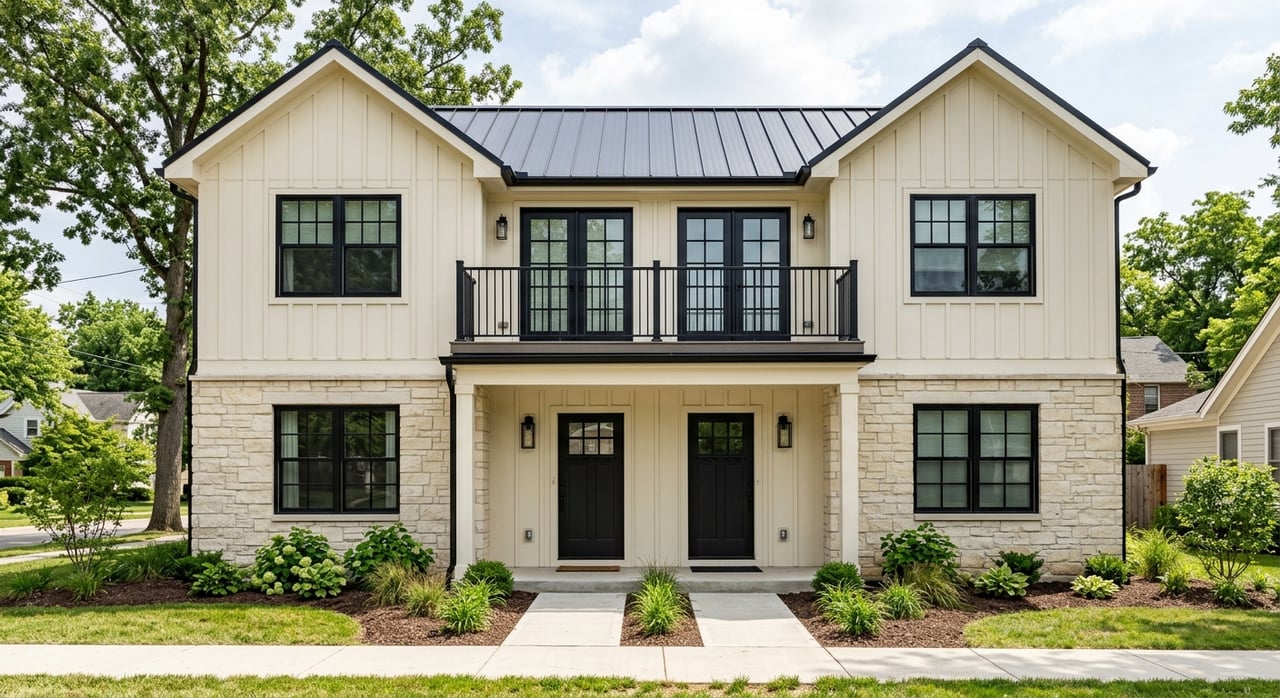
If you are looking at a duplex, triplex, or fourplex in Houston, the biggest mistake is treating the city like one market. Houston is growing, jobs are expanding, and rental demand is holding up well, but small multifamily performance can change fast from one submarket to the next. If you want better decisions and fewer surprises, you need a neighborhood-level strategy that accounts for rents, flood risk, taxes, site constraints, and financing from day one. Let’s dive in.
Why Houston small multifamily needs a local strategy
Houston has strong fundamentals, but they do not tell the whole story for a 2 to 4 unit property. The metro added more than 198,000 residents from 2023 to 2024, Harris County reached about 5.0 million residents in the Census Bureau’s July 2025 estimate, and Houston-area employment stood at 3.47 million in May 2025. At the same time, the broader housing market ended 2025 in a more balanced position with 4.5 months of inventory and a statistically flat single-family median price of $335,000.
That balance matters for investors because it points to a more disciplined environment. You cannot rely on broad appreciation or citywide averages to make a small multifamily deal work. In Houston, micro-market performance matters more than metro headlines.
Houston multifamily occupancy was nearly 94% in the first quarter of 2025, and the average multifamily cap rate was 5.9% in the fourth quarter of 2025. The metro also recorded 10 consecutive quarters of demand gains by the second quarter of 2025, with average effective rent at $1,277 per unit. Those numbers are helpful as a backdrop, but they are still too broad for underwriting a duplex in the Heights or a fourplex near Spring Branch.
Start with NOI, not the asking price
When you evaluate small multifamily in Houston neighborhoods, your first screen should be net operating income, or NOI. The Appraisal Institute’s direct capitalization framework shows value and cap rate are tied to income, which is why the key question is not just what the seller wants, but what the property can produce after realistic operating expenses.
That approach keeps you grounded. A clean-looking building with a high asking price can still underperform if rents are below submarket, maintenance is deferred, or insurance and taxes are heavier than expected. A property with a lower sticker price can also disappoint if the lot layout, parking, or flood exposure limits future upside.
For a practical first-pass review, focus on these basics:
- Current and projected rent by unit
- Vacancy assumption based on same-submarket conditions
- Property taxes set by local taxing units
- Flood insurance cost if applicable
- Repairs and renovation scope
- Parking and access constraints
- Deed restrictions or site-plan limitations
The goal is simple: estimate stabilized NOI based on the property as it will realistically operate, not on best-case hopes.
Why same-submarket rent comps matter most
One of the clearest Houston investing mistakes is using metro-wide rent averages for a close-in neighborhood asset. Rent spreads across Houston submarkets are wide enough to distort your numbers if you are not careful.
In the second quarter of 2025, average effective rent was reported at $2,075 in Montrose/Museum/Midtown, $1,744 in Heights/Washington Ave, and $1,230 in Memorial/Spring Branch. That gap is too large to ignore. If you underwrite a fourplex in one area using rents from another, your return expectations can fall apart quickly.
Your rent comp set should match the property as closely as possible. Look for the same submarket, similar building vintage, similar unit count, and a comparable rehab level. In close-in Houston, renovation quality and age matter because newer or meaningfully updated product has been associated with stronger occupancy and rental performance.
Key Houston neighborhoods to compare
For close-in small multifamily, several Houston neighborhoods and submarkets deserve extra attention. Each has a different demand profile, rent level, and physical development pattern.
Greater Heights
Greater Heights sits inside the 610 Loop and is roughly bounded by I-10, I-610, I-45, and White Oak Bayou. The City of Houston describes the area as being in high demand because of its proximity to downtown and major freeways, with older housing stock being rehabilitated alongside denser redevelopment.
For small multifamily investors, that usually means you need to study both current income and future competition. Older duplexes and fourplexes may benefit from location and access, but rehab quality, parking, and lot functionality can have a major effect on rent potential.
Lazybrook and Timbergrove
Lazybrook and Timbergrove offer a different profile. The City of Houston describes the area as deed-restricted, set along White Oak Bayou, and made up largely of ranch-style brick homes from the 1950s and 1960s. The city also notes that prices have been rising as demand increases for close-in housing in attractive settings.
For an investor, this is where local rules and physical constraints deserve close review. A property may sit in a highly appealing close-in area, but deed restrictions, lot shape, parking, and flood considerations can limit what you can improve or add.
Montrose, Museum District, and Midtown
This cluster stands out for higher reported effective rents. For a small multifamily strategy, that can create strong income potential, but it also raises the bar on acquisition pricing, finishes, and renovation standards.
If you target this area, your underwriting should be especially strict. A dated property may need more capital to compete, and you should avoid assuming top-of-submarket rents unless the unit interiors, curb appeal, and site function clearly support them.
Heights and Washington Avenue
Heights/Washington Ave sits in an important middle ground for many buyers and investors. Reported effective rents are below Montrose/Museum/Midtown but well above Memorial/Spring Branch, which can create opportunities if you buy with discipline and keep your renovation plan aligned with the local rent ceiling.
This area rewards careful comp work. Two properties a short drive apart can attract different tenant demand based on block pattern, access, walkability, traffic flow, and condition.
Memorial and Spring Branch
Memorial/Spring Branch shows a lower reported average effective rent than the other close-in comparison areas in the research. That does not make it weak. It simply means your numbers must reflect the actual submarket reality, not a citywide assumption.
This can be a useful comparison set if you are balancing price point with renovation scope. The right deal may come from buying below replacement cost and keeping your pro forma conservative.
Walkability and access can support demand
In close-in Houston neighborhoods, convenience can shape rental demand. Plan Houston tracks walkability through factors like block length, intersection density, sidewalks, ADA access, and tree canopy. The city’s transportation goals also emphasize access to frequent transit and major activity centers.
For you, this means a property's surroundings deserve as much attention as the unit mix. A small multifamily building near major job centers, daily services, and connected streets may support steadier demand than a similar building in a less functional location.
You do not need to turn this into a vague lifestyle pitch. Just stay practical and ask whether the property offers strong day-to-day access that renters are likely to value.
Houston site rules can change the deal
Houston does not use zoning in the traditional way, but development is still governed by ordinance codes, subdivision platting, parking, setbacks, access, and multifamily site-plan review. That means the lot and its legal framework can matter just as much as the building itself.
Before you assume expansion, reconfiguration, or added value, review the basics carefully:
- Parking requirements and actual usable parking
- Lot dimensions and building setbacks
- Access and circulation on the site
- Deed restrictions
- Whether flood-prone areas affect the property
- Whether improvements could trigger additional review
In small multifamily, these details are not minor. They can determine whether your renovation plan is simple, expensive, or not feasible at all.
Flood risk should be in your first draft
Flood exposure is one of the most important Houston filters for small multifamily investing. The City of Houston requires flood-prone areas to be identified on general plans, and local planning resources track the share of residences inside FEMA’s 100-year floodplain.
FEMA states that flood insurance is a separate policy, most homeowners insurance does not cover flood damage, and government-backed mortgages in high-risk flood areas require flood insurance. For your underwriting, that means flood insurance should go into the initial pro forma, not into a later revision after you are already emotionally attached to the deal.
This is especially important in close-in neighborhoods near bayous or low-lying areas. Always pair rent projections with a flood review so your expected cash flow reflects the real carrying cost.
Financing changes if you live there
Small multifamily financing is not one-size-fits-all. If you plan to live in one unit of a 2 to 4 unit property, residential mortgage channels may be available. Freddie Mac states that owner-occupied primary residences with 2 to 4 units can qualify, and rental income from the other units may be counted in debt-to-income ratios.
That is very different from a pure investor purchase. The research notes that credit used to acquire rental property with more than 2 housing units often shifts into business-purpose or commercial-style lending when the buyer is not occupying the property.
So before you shop, get clear on your strategy:
- Will you owner-occupy one unit?
- Is this a pure investment purchase?
- Are you buying for current cash flow, future repositioning, or both?
- Does your financing path match the property type and unit count?
That clarity can save time and help you compare deals more accurately.
Taxes and operating costs in Harris County
Texas has neither a personal nor corporate income tax, but that does not make real estate carrying costs simple. The Texas Comptroller notes that there is no state property tax, and local taxing units set property tax rates.
In Harris County, qualifying homeowners may receive a residence homestead exemption, including at least $140,000 for school taxes and a 20% optional county exemption. That matters because the tax picture may look different for an owner-occupant than for a non-owner-occupied investment property.
For small multifamily underwriting, hidden costs often come from the same places:
- Property taxes
- Flood insurance
- Deferred maintenance
- Parking or site limitations
- Renovation costs tied to older building stock
If you underestimate any of those, a deal that looked good on paper can become average very quickly.
A practical Houston small multifamily strategy
If you are targeting duplexes, triplexes, or fourplexes in Houston neighborhoods, a disciplined process usually works better than chasing the hottest headline. Start with a specific submarket, build a tight rent comp set, and underwrite the property based on stabilized NOI rather than optimism.
Then pressure-test the deal. Review flood exposure, taxes, parking, deed restrictions, access, and renovation quality before you decide what the property is really worth to you. In close-in Houston, strong investing is usually less about broad metro appreciation and more about buying the right asset in the right micro-market at the right basis.
If you want help comparing Houston neighborhoods, evaluating a 2 to 4 unit property, or planning your next move with a more analytical lens, Texas Residential Specialists can help you sort through the numbers and the neighborhood details with a hands-on, local approach.
FAQs
What is the best way to analyze a small multifamily property in Houston?
- Start with stabilized NOI, then compare that income to realistic operating costs, local rent comps, flood risk, taxes, and site constraints before deciding on value.
Why do same-submarket rent comps matter for Houston multifamily investing?
- Houston submarkets show large rent differences, so using rents from the wrong area can lead to unrealistic projections and poor pricing decisions.
How does owner-occupied financing work for Houston duplexes, triplexes, and fourplexes?
- If you live in one unit, a 2 to 4 unit property may fit residential mortgage channels, and rental income from the other units may help with debt-to-income calculations.
What extra costs should you budget for when buying small multifamily in Harris County?
- The biggest items to review early are property taxes, flood insurance, deferred maintenance, parking or access issues, and costs tied to older building condition.
Which Houston neighborhoods are most relevant for close-in small multifamily investing?
- Greater Heights, Lazybrook/Timbergrove, Heights/Washington Ave, Montrose/Museum/Midtown, and Memorial/Spring Branch are all useful areas to compare because rents, demand drivers, and physical constraints vary by submarket.
Why is flood risk so important for Houston small multifamily buyers?
- Flood exposure can affect insurance costs, financing requirements, and long-term cash flow, so it should be reviewed at the start of your underwriting process.