Shopping for a higher-end home in Kingwood and wondering if you’ll need a jumbo loan? You’re not alone. As prices rise, more buyers are brushing up against conforming loan limits and facing new underwriting rules. This guide breaks down where jumbo loans start in Harris County, what lenders expect, how rates compare, and the local factors that can affect your approval and monthly payment. Let’s dive in.
Jumbo loans explained
A jumbo loan is any first mortgage that exceeds the conforming loan limit for your county. Conforming mortgages follow Fannie Mae and Freddie Mac rules. Jumbo loans do not, so lenders apply their own standards and risk controls.
For 2024, the Federal Housing Finance Agency set the baseline conforming limit for a one-unit property at $766,550. Harris County uses the baseline limit. If your primary mortgage will be greater than that amount, you’re likely looking at a jumbo loan. Lenders can have their own overlays, so confirm the cutoff when you apply.
Where jumbo begins in Kingwood
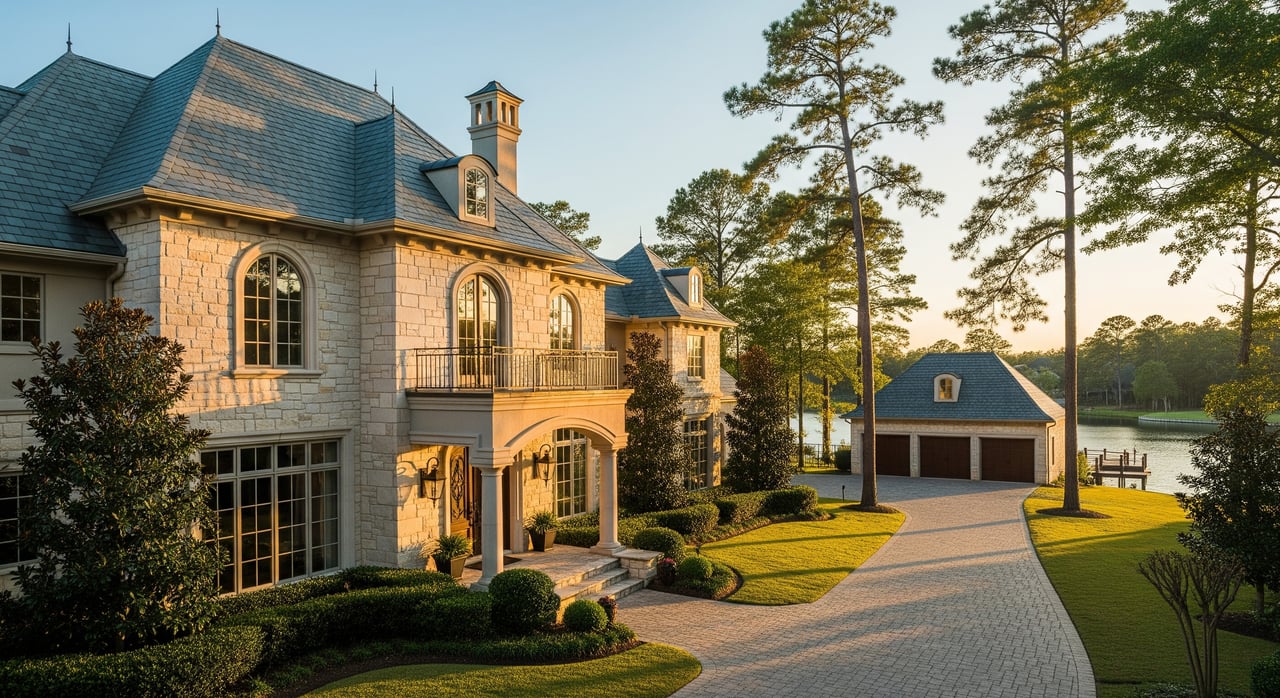
Kingwood offers a wide mix of homes, from established starter properties to waterfront and luxury listings. Here’s how common price points tend to map to financing types:
- $250,000–$400,000: Typically conforming loans. FHA or VA may be options based on eligibility.
- $400,000–$700,000: Still usually conforming, depending on your down payment and taxes/insurance.
- $700,000–$1,200,000: This is where many buyers cross into jumbo territory, especially with lower down payments.
- $1,200,000+: Jumbo is the norm, often with larger down payments and more documentation.
The key is your loan amount, not just the price. If the loan you need is above $766,550, you’ll move into jumbo.
How to tell if your loan is jumbo
Use this simple formula: Loan amount = Purchase price − Down payment.
Examples for quick reference:
- $800,000 purchase, 10% down → loan $720,000 (conforming)
- $800,000 purchase, 5% down → loan $760,000 (conforming if at or below $766,550)
- $800,000 purchase, 3% down → loan $776,000 (jumbo)
- $900,000 purchase, 20% down → loan $720,000 (conforming)
- $900,000 purchase, 10% down → loan $810,000 (jumbo)
Plan your down payment with the limit in mind. A slightly larger down payment can keep you within conforming rules, which may speed up underwriting and improve pricing.
Jumbo underwriting basics
Jumbo loans serve strong borrowers purchasing higher-value homes. Expect tighter standards and more documentation than a typical conforming loan.
Down payment and equity
- Many jumbo lenders expect 10–20% down as a baseline.
- 20% or more often earns better pricing and avoids private mortgage insurance.
- Some portfolio lenders allow 5–10% down, but they may require higher credit scores, more reserves, or higher rates.
Credit score and debt-to-income
- Strong credit profiles are the norm. Many lenders look for mid-700s (often 720+) for best terms.
- Typical maximum debt-to-income ratios range from 43% to 50%, depending on reserves, credit, and structure.
Cash reserves
- Expect higher reserve requirements than conforming loans.
- Common standards: 6 months of PITI for many jumbos, and 9–12 months for larger balances or riskier profiles.
- Reserves usually must be documented in liquid or retirement accounts, with clear access rules.
Documentation and assets
- Be ready to provide several months of bank statements, retirement/investment account statements, and full paper trails for large deposits.
- Gift funds and transfers must be well documented and seasoned according to lender rules.
Employment and income
- W-2s, pay stubs, and tax returns are standard. Self-employed or nontraditional income often requires two years of returns and more detailed underwriting.
Appraisals and valuation
- Jumbo appraisals can be more involved. Some lenders require two appraisals or extra market support for unique or high-value homes.
How jumbo rates compare
Jumbo mortgages have historically carried a higher rate than conforming loans because they are not backed by Fannie Mae or Freddie Mac. The spread often falls in the 0.25%–0.75% range for similarly qualified borrowers, but it varies with market conditions and lender competition.
You can sometimes narrow the spread with:
- Higher down payment and lower loan-to-value
- Excellent credit and a lower DTI
- Extra reserves
- Considering an adjustable-rate jumbo (with reset risk that you should weigh carefully)
Product choices that fit Kingwood buyers
- Jumbo fixed-rate: Predictable payments. Good if you plan to hold long term.
- Jumbo ARM: Often a lower initial rate. Consider only if you expect to move or refinance within the fixed period and you understand reset risk.
- Portfolio or credit union jumbo: Lenders that keep loans on their books may be more flexible on documentation and pricing, particularly for relationship banking.
- Non-QM jumbo: Options for self-employed or complex income. These can be more expensive and require specialized underwriting.
- Piggyback seconds: Less common today, but sometimes used to manage loan-to-value and avoid PMI. They add complexity and can increase overall cost.
- VA at higher balances: VA does not have the same statutory caps, but lender overlays and residual-income rules apply. Speak with a VA-knowledgeable lender if you’re eligible.
Timeline and process differences
Jumbo financing moves on a similar path to conforming loans, but with more checks and possibly a longer runway.
- Pre-approval: Conforming can be 24–72 hours. Jumbos often take 3–7 business days due to deeper asset reviews.
- Underwriting to close: Conforming is often 2–4 weeks. Jumbos commonly take 3–6 weeks or longer.
Common causes of delays:
- Missing documentation for large deposits or retirement accounts
- Appraisals needing extra comps or second opinions
- Investor overlays that add more conditions
- Title or HOA complexity on higher-value properties
How to speed things up:
- Gather 2–3 months of bank and investment statements, current retirement statements, W-2s, pay stubs, and tax returns before shopping.
- Disclose large deposits early and document sources.
- Work with lenders familiar with Harris County and Kingwood property types, including flood and HOA nuances.
Local factors that matter in Kingwood
Buying in Kingwood comes with a few local variables that can shape your financing and monthly payment.
Flood zones and insurance
Some Kingwood neighborhoods are flood-prone. If your property is in a required flood zone, you must carry flood insurance. Premiums will be part of your monthly housing cost and can affect your debt-to-income ratio and approval. Private flood insurance options have grown, but prices and acceptability vary by lender.
Property taxes and HOAs
Harris County property taxes and special district assessments vary by neighborhood and can significantly impact your PITI. Review recent tax statements from the county appraisal office and include HOA dues in your monthly budget. These costs are counted when a lender assesses your ability to repay.
Appraisals and comps
Higher-priced or unique Kingwood homes, such as waterfront lots or larger tracts, can be harder to comp. If the appraisal comes in short, be prepared to negotiate, cover a gap, or adjust terms. Your agent can help you set expectations and structure protective contingencies.
Local lender familiarity
Lenders who know Harris County and the Houston metro tend to navigate appraisals, flood insurance, and HOA documentation with fewer surprises. That can save time and reduce last-minute conditions.
Smart strategies for jumbo shoppers
- Get fully pre-approved early. Provide full documentation to your lender before you tour homes in the jumbo range.
- Model your total payment. Include taxes, homeowner’s insurance, flood insurance if required, and HOA dues.
- Set a down payment plan. If you’re near the conforming limit, a slightly higher down payment might improve pricing and speed.
- Right-size your contingencies. Appraisal, financing, and timeline terms should match jumbo realities, especially for unique properties.
- Maintain clean asset trails. Avoid large unexplained deposits and keep funds seasoned in the same accounts when possible.
- Consider rate options. Compare fixed and ARM scenarios and understand the tradeoffs.
How we help Kingwood buyers
You deserve calm, clear guidance when you’re weighing jumbo financing and higher-value homes. At Texas Residential Specialists, you get neighborhood-level insight with institutional-grade rigor. We help you:
- Pinpoint the right Kingwood micro-markets for your goals and budget
- Analyze taxes, HOA dues, and insurance impacts on monthly costs
- Craft offers and contingencies that respect jumbo timelines and appraisal realities
- Coordinate a smooth transaction from contract to close with responsive communication
If you’re exploring the jumbo range, let’s align your search, timeline, and contract terms so you can move with confidence. Connect with Texas Residential Specialists to start a focused plan for your next Kingwood home.
FAQs
What is a jumbo loan in Harris County?
- A jumbo loan is a first mortgage above the 2024 conforming limit of $766,550 for a one-unit home in Harris County. Anything above that is typically considered jumbo.
When does a Kingwood purchase need a jumbo loan?
- If the loan amount you need exceeds $766,550. Calculate it by subtracting your down payment from the price. If the result is above the limit, you’ll likely use a jumbo product.
How much down payment is typical for a jumbo loan?
- Many lenders want 10–20% down. Putting 20% or more often improves pricing and avoids PMI. Some portfolio lenders allow lower down, with stricter requirements.
Are jumbo mortgage rates always higher than conforming?
- Not always, but often. The spread commonly ranges from 0.25% to 0.75%, depending on credit, down payment, reserves, and lender competition.
How long does a jumbo loan take to close in Kingwood?
- Plan for 3–6 weeks from underwriting to close. Pre-approvals can take 3–7 business days if your documentation is complete.
What Kingwood-specific costs affect jumbo approval?
- Flood insurance where required, varying property taxes, and HOA dues all factor into your monthly payment and debt-to-income ratio. Appraisals can be more complex for unique or waterfront properties.